LED light therapy has been around in clinical settings for longer than most people realise. It’s not new. It’s not a fad. And it’s not the same as the light coming from your phone screen.
Clinical LED uses specific wavelengths of light — measured in nanometres — to interact with your skin at a cellular level. Different wavelengths penetrate to different depths and trigger different responses. That’s why red light and blue light do very different things.
Let’s break it down.
What is LED light therapy?
LED stands for light-emitting diode. In a clinical setting, panels fitted with medical-grade LEDs deliver concentrated wavelengths of light to your skin. There’s no UV involved — this isn’t a sunbed and it doesn’t carry the same risks as UV exposure.
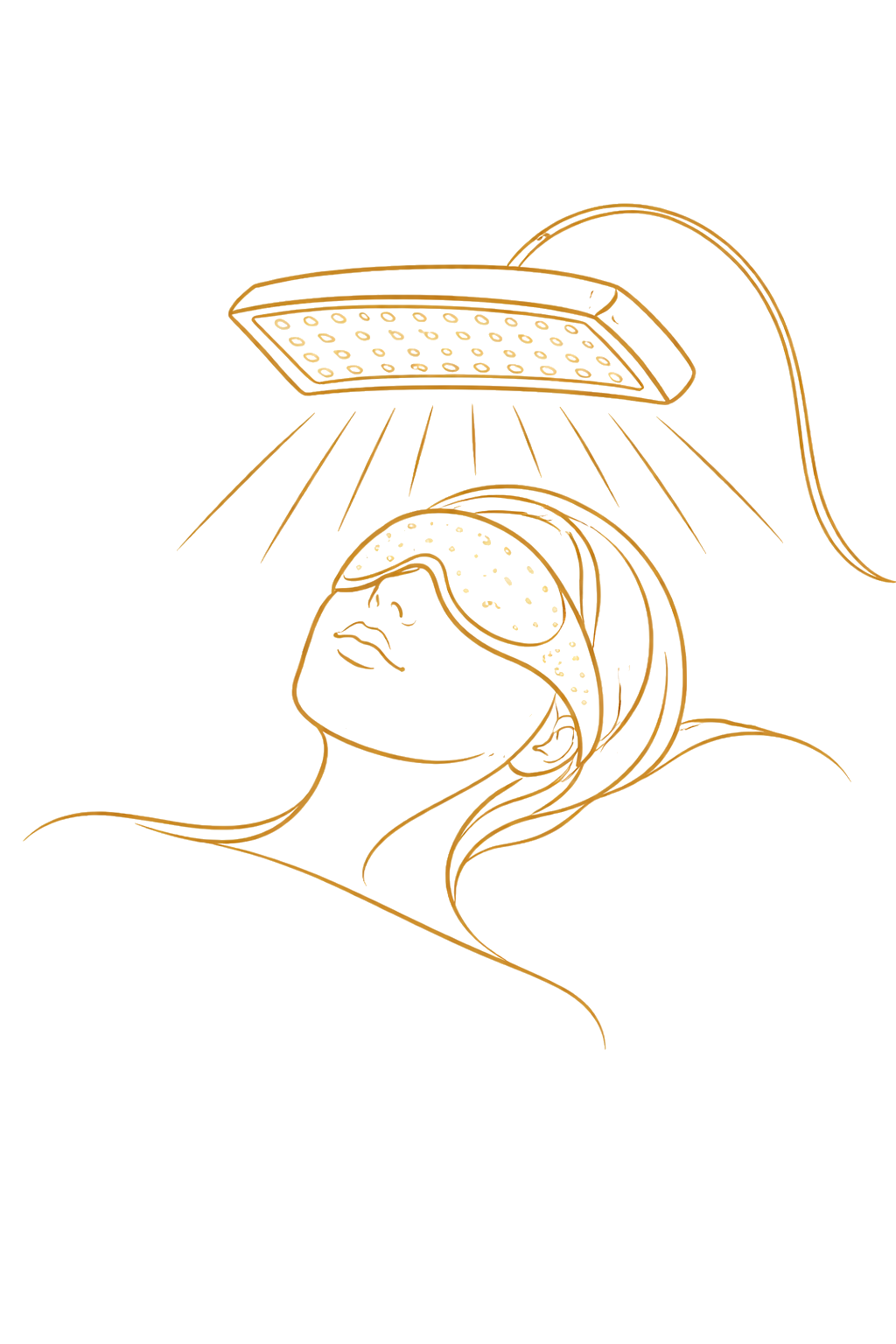
The treatment is non-invasive. Nothing touches your skin. Nothing is injected. You lie under a panel, the light does its thing, and you get on with your day. Most people find it genuinely relaxing.
Red light: the deeper wavelength
Red light therapy uses wavelengths in the 630 to 660 nanometre range. At this range, the light penetrates beyond the surface of your skin into the deeper dermal layers.
What does it do there? Research suggests red light may support the skin’s natural collagen production processes. Collagen is the protein responsible for skin firmness and elasticity — the stuff that gradually declines as you age.
Red light may also help with:
- Supporting skin healing and recovery after other treatments
- Reducing the appearance of redness and irritation
- Improving overall skin tone and texture over a course of treatments
- Supporting circulation in the treated area
It’s worth being clear: red light therapy isn’t a one-session miracle. The effects are cumulative. You’re supporting your skin’s own biological processes, not overriding them. That takes consistent sessions over weeks.
Blue light: the surface worker
Blue light therapy operates at around 415 nanometres — a shorter wavelength that doesn’t penetrate as deeply. It works primarily in the upper layers of your skin.
Blue light’s main claim to fame is its interaction with the bacteria that contribute to acne. Specifically, it targets Cutibacterium acnes (formerly Propionibacterium acnes), which produces a compound called porphyrin. When blue light hits porphyrin, it creates a reaction that may help reduce the bacteria on the skin’s surface.
This makes blue light particularly relevant for people dealing with inflammatory acne — the red, angry kind that’s driven by bacterial activity rather than just blocked pores.
Blue light may also help with:
- Reducing the frequency of active breakouts over time
- Calming inflamed skin
- Supporting oil regulation when used as part of a broader treatment plan
Like red light, blue light therapy works best as a course rather than a one-off. You’re shifting the balance over time, not flipping a switch.
How a session works at BLAAH
An LED light therapy session at our clinic is straightforward. Here’s what happens.
You’ll lie comfortably on a treatment bed. We’ll give you protective eye shields to wear — the light is bright and your eyes need to be covered for the duration.
The LED panel is positioned over the treatment area (usually your face, but it can be used on other parts of the body too). Then it’s switched on.
A typical session runs for about 20 minutes. During that time, you just lie still and relax. Some clients actually fall asleep. There’s no heat, no pain, no buzzing sensation. You might notice a gentle warmth, but that’s about it.
Afterwards, recovery is typically minimal. Your skin might look slightly flushed for a short while, but you can apply make-up, go back to work, or carry on with your day immediately.
Who is it suitable for?
LED light therapy suits nearly all skin types and tones. Because it’s non-invasive and doesn’t use UV, the risk profile is very low compared to many other skin treatments.
That said, it’s not suitable for everyone. If you’re taking photosensitising medications, have a history of photosensitivity disorders, or are pregnant, let your clinician know. They’ll assess whether LED is appropriate for you.
If you have active cold sores in the treatment area, it’s best to wait until they’ve cleared.
Standalone or add-on
LED light therapy works well on its own, but it really comes into its own as an add-on to other treatments.
At BLAAH, we often pair LED with chemical peels or dermal stamping. After a peel has removed dead surface cells, LED light can work more effectively on the fresh skin beneath. After stamping, LED may support the skin’s recovery process.
LED is actually included as part of our dermal stamping sessions — it’s built into the treatment protocol rather than charged as an extra.
How many sessions do you need?
For most concerns, we recommend starting with a course of weekly sessions. The exact number depends on what you’re addressing and how your skin responds, but a typical starting point is 6 to 10 weekly sessions.
After your initial course, many clients move to monthly maintenance sessions to sustain the benefits.
Your clinician will assess your skin and recommend a treatment plan during your consultation. Some people see noticeable changes within a few weeks. For others, it’s more gradual. Skin doesn’t work to a fixed timeline.
What it won’t do
LED light therapy isn’t a replacement for a good skincare routine, sun protection, or other treatments your clinician might recommend. It’s one piece of the puzzle.
It won’t treat deep scarring on its own. It won’t eliminate acne if there are hormonal or dietary factors at play that haven’t been addressed. And it won’t produce dramatic overnight changes.
What it can do is support your skin’s health over time, with virtually no risk and no recovery required. For a 20-minute session that feels like a nap, that’s a reasonable trade.
Visit our LED light therapy treatment page for more details, or book a consultation to discuss whether LED is right for your skin. Check our pricing page for session and package costs.
