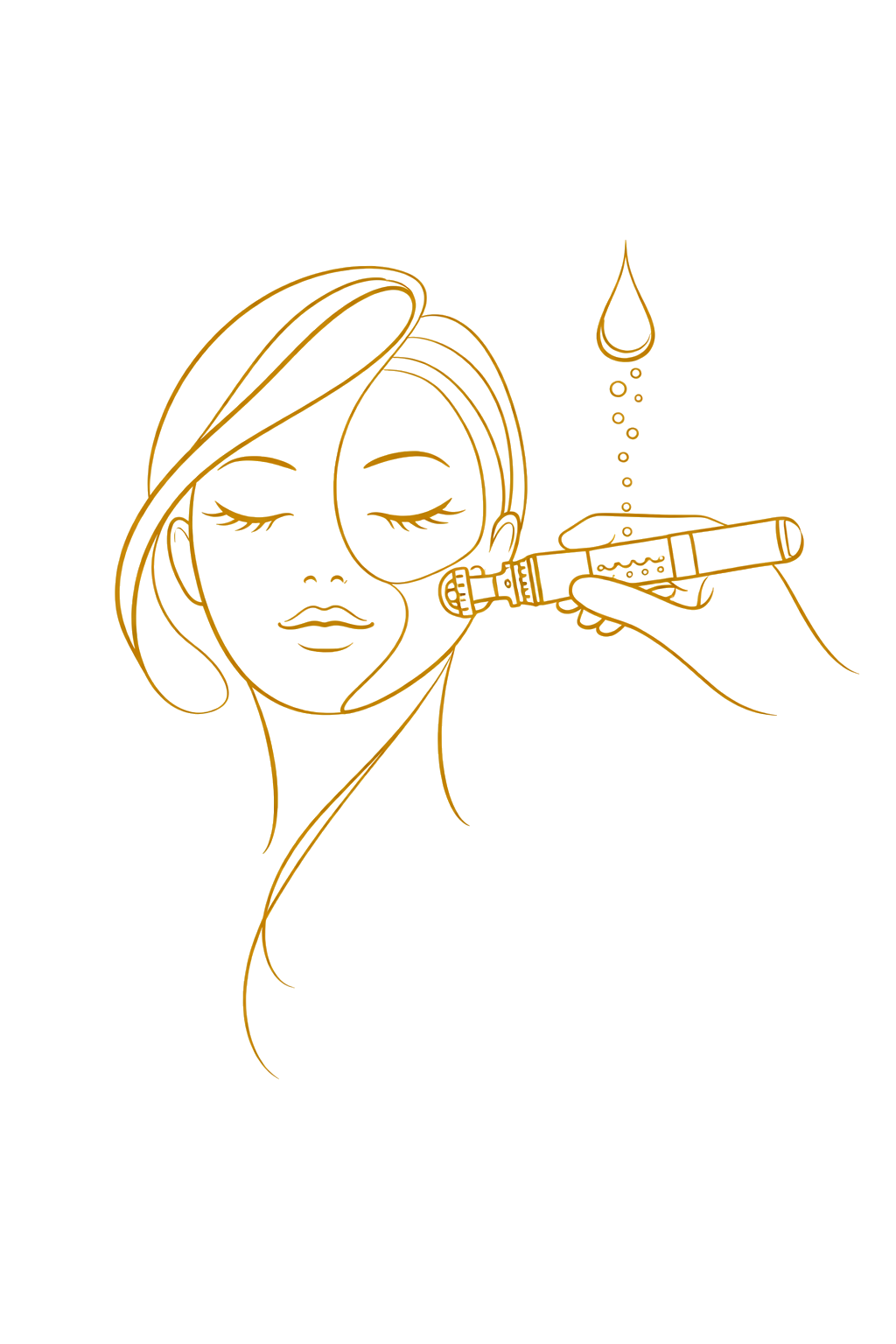
If you’ve been researching skin needling, you’ve probably come across both microneedling and dermal stamping. They sound similar, and they share the same basic principle. But the technique is different, and that difference matters for your skin.
What microneedling is
Microneedling uses tiny, sterile needles to create controlled micro-injuries in the skin. These small punctures trigger your body’s wound healing response, which ramps up collagen and elastin production. As the skin repairs itself, it becomes firmer, smoother and more even.
Traditional microneedling devices use a roller or pen with needles that move in and out rapidly. The pen-style devices (like the ones you’ve probably seen on Instagram) move the needles in a stamping motion, while older derma rollers drag needles across the skin at an angle.
The concept has been around for over 20 years and there’s solid clinical evidence behind it. It works. The question is how it’s done.
What dermal stamping is
Dermal stamping uses a device that moves needles in a purely vertical motion. Straight in, straight out. No dragging, no rolling, no angled entry.
With a traditional derma roller, the needles enter the skin at an angle as the roller moves across the surface. This can create a slight tearing motion, particularly on uneven skin. Pen-style devices are better, but some still have a slight lateral wobble during operation.
A dedicated stamping device eliminates that lateral movement entirely. The needles puncture vertically and retract vertically. The result is cleaner channels, less surface trauma, and more consistent depth across the treatment area.
Less surface trauma means less redness, less bruising and potentially faster recovery. The micro-channels created are also more uniform, which matters when you’re infusing active ingredients through them (more on that shortly).
Why the delivery method matters
Here’s where it gets interesting. Creating micro-channels in the skin isn’t just about triggering collagen production. Those channels are also a delivery system.
When you create thousands of tiny openings in the skin, you have a window of opportunity to infuse active ingredients directly into the deeper layers where they can actually do something. Applied to intact skin, most serums sit on the surface. Applied through micro-channels, they reach the dermis.
This is why what you put on the skin during and after needling matters as much as the needling itself.
What are exosomes?
Exosomes are getting a lot of attention in skincare right now, and for good reason.
In simple terms, exosomes are tiny vesicles (think of them as microscopic delivery parcels) that cells release to communicate with other cells. They carry growth factors, proteins, lipids and genetic material that tell receiving cells what to do.
In a skin treatment context, exosome serums are applied during or immediately after needling. The exosomes are delivered through those micro-channels into the deeper skin layers, where they signal cells to ramp up repair, produce collagen, and reduce inflammation.
The research on topical exosomes for skin rejuvenation is still relatively young, but early clinical studies are promising. They appear to accelerate healing and enhance the collagen-building response from needling.
What is PDRN?
PDRN stands for polydeoxyribonucleotide. It’s derived from salmon DNA (yes, really) and has been used in wound healing for years before making its way into aesthetic treatments.
PDRN works by activating a specific receptor (the A2A adenosine receptor) that plays a role in tissue repair and anti-inflammatory responses. When infused into the skin during a needling treatment, it supports cell regeneration, hydration and collagen synthesis.
Like exosomes, PDRN is applied topically through the micro-channels created during treatment. The two can be used together or separately depending on your skin concerns and treatment plan.
How we combine treatments at BLAAH
At BLAAH, we don’t just stamp and send you home. Our approach combines dermal stamping with active serums and LED light therapy in a single session.
A typical treatment looks like this:
- Skin prep — thorough cleanse and application of a topical numbing cream. This sits for 20-30 minutes to take effect.
- Dermal stamping — the treatment itself, using vertical stamping at a depth tailored to your skin concerns and the area being treated. Face treatments typically use depths between 0.5mm and 2.0mm.
- Serum infusion — exosome and/or PDRN serums are applied during and immediately after stamping, while the micro-channels are still open.
- LED light therapy — red and near-infrared LED is applied post-treatment to reduce inflammation and support the healing process.
The whole appointment takes about 60-90 minutes, including numbing time.
What concerns it addresses
Dermal stamping with active serums may help improve the appearance of:
- Skin texture — roughness, enlarged pores, general unevenness
- Fine lines and wrinkles — particularly early lines and crepey skin
- Acne scarring — rolling and boxcar scars respond well; deep ice-pick scars are harder to treat with needling alone
- Firmness and elasticity — loss of bounce and tightness
- Pigmentation — uneven tone, post-inflammatory marks (with appropriate depth and aftercare)
- Overall skin quality — that hard-to-define “glow” that comes from healthier, better-functioning skin
Results depend on the concern, the number of sessions, and how well you follow aftercare. Needling isn’t a one-and-done treatment for most concerns.
How many sessions you’ll need
For most skin concerns, we recommend:
- 3-6 sessions spaced 4-6 weeks apart
The spacing matters. Your skin needs time to complete its healing and collagen remodelling cycle before the next round of treatment. Doing sessions too close together can be counterproductive, causing unnecessary irritation without giving your skin time to build.
You’ll often notice a difference in skin texture and glow after 2-3 sessions. Scarring and firmness improvements tend to take longer, becoming more apparent after 4-6 sessions as cumulative collagen remodelling kicks in.
Maintenance sessions every 3-6 months can help sustain results over time.
Recovery
One of the advantages of vertical stamping with less surface trauma is a more manageable recovery period.
What to expect:
- First 24 hours: Redness, similar to moderate sunburn. Skin may feel warm, tight and slightly swollen. This is normal.
- 24-48 hours: Redness starts to fade. Some people experience mild flaking or dryness.
- 48-72 hours: Most visible redness has resolved. Skin may still feel slightly sensitive.
- Day 5-7: Skin settles. You’ll likely notice improved texture and a fresh quality to your skin.
Most people are comfortable going out in public by day 2-3 with mineral sunscreen on. If you have an event or important meeting, we’d suggest booking your treatment at least 5 days beforehand.
Aftercare
Your skin has thousands of open micro-channels after treatment. What you put on it and how you treat it over the next few days directly affects your results.
Do:
- Use only the post-treatment products we provide or recommend for the first 48 hours
- Apply SPF 50+ every day, reapplying every 2 hours when outdoors — non-negotiable
- Keep skin hydrated with gentle, fragrance-free moisturiser
- Sleep on a clean pillowcase the night of treatment
- Drink plenty of water
Don’t:
- Apply makeup for at least 12-24 hours (we’ll advise based on your treatment depth)
- Use active ingredients (retinol, AHAs, BHAs, vitamin C) for 5-7 days
- Exercise or sweat heavily for 24-48 hours
- Swim in pools, ocean or spas for 48-72 hours
- Touch your face with unwashed hands
- Have direct sun exposure without protection
Possible risks and side effects
Like any skin treatment, needling carries risks.
Common and expected: Redness, mild swelling, warmth, tightness, minor pinpoint bleeding during treatment, light flaking.
Less common: Prolonged redness, bruising, infection (usually from poor aftercare hygiene), post-inflammatory hyperpigmentation (more likely in darker skin tones if depth and aftercare aren’t managed carefully), cold sore reactivation (if you’re prone to them, let us know beforehand).
Rare: Scarring, allergic reaction to applied serums.
We go through all of this during your consultation, along with a medical history review to make sure needling is appropriate for you. Read more about what happens at your first cosmetic consultation if you’re not sure what to expect.
Getting started
If you’re interested in improving your skin texture, addressing scarring, or just investing in better skin quality overall, dermal stamping with active serums is worth looking into.
Book a consultation at our Penrith clinic and we’ll assess your skin, talk about what you want to achieve, and recommend a treatment plan. We’ll also explain exactly what’s involved so there are no surprises on the day. For more details, visit our dermal stamping treatment page or check our pricing page.
